THE FRAGBRAG BLOG · INDIAN PERFUMERY
Indian Perfumes, Decoded: A Beginner’s Guide to Attar and Kannauj
A starting point for exploring India’s attar tradition, its materials and the questions behind a good sample.
By FragBrag · Research-led guide
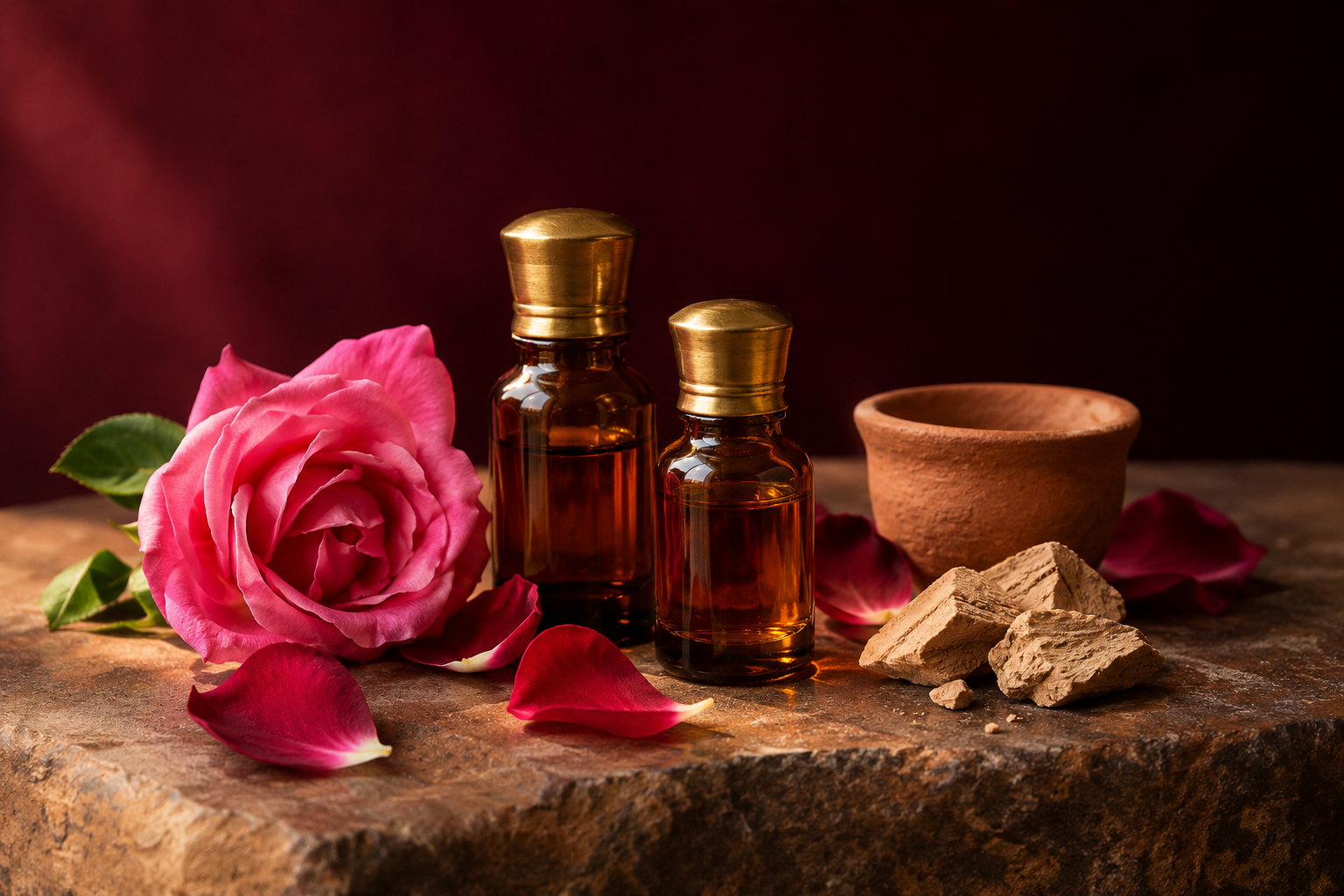
Indian fragrance can begin with a small vial, a familiar flower or the memory of rain on dry earth. Attar offers one way into that world. Understanding where it comes from and how it is made helps you ask better questions before choosing a scent.
Why begin with Kannauj?
Kannauj in Uttar Pradesh is closely associated with India’s attar-making tradition. The National Portal of India’s Kannauj Perfume profile highlights its skilled perfumers and flower-based fragrances, including rose and jasmine.
For a new perfume enthusiast, Kannauj is a useful starting point for learning about origin and craft. A place name can open a conversation with a maker: who distilled the perfume, which materials were used, and what gives this particular batch its character?
What traditional attar means
The Kannauj district administration’s FFDC guide describes traditional attar as aromatic materials distilled onto a base oil through the deg-bhapka method. Flowers, herbs, spices and other fragrant materials can be used; the guide names sandalwood or another natural oil as the receiving base.
This makes the process part of the perfume’s identity. It is useful to ask a seller about both the aromatic material and the carrier, rather than judging only by the bottle size or the word “attar”. The same FFDC guide distinguishes traditional attar from other fragrance mixtures and explains that a roll-on is an application format: the container alone does not establish how its contents were made.
Three starting points: petals, jasmine and earth
Gulab / rose: Start with a flower you already recognise. While smelling a sample, describe your own impression: fresh petals, softer floral warmth, or something more textured? These are prompts for observation, rather than promises about every rose attar.
Bela: The Kannauj district’s FFDC guide lists bela among its traditional attars. Try comparing a sample with rose and note which floral character feels more personal to you.
Mitti / earth: The FFDC guide also lists mitti attar. Let it prompt a different set of observations: does your sample suggest dry earth, warmth or a softer impression? Treat these as questions for your own exploration, then let the sample shape your description.
Explore it through the three FragBrag aromas
Decode The Weather: Keep a short scent diary in the conditions you actually experience. Note the temperature, time spent outdoors and time in air-conditioning. Record how the same sample feels on different days before drawing conclusions.
Decode The Event: Think about the setting and the people sharing it. Your preferred scent for a quiet evening may differ from your choice for a celebration. Begin with the maker’s application directions and judge whether the result suits the occasion.
Decode The Note: Choose one idea—rose, jasmine or earth—and compare your opening impression with what remains later. Write in your own words. Familiar references often tell you more than a long list of technical descriptors.
Questions to ask before a full bottle
- Who made it, and where was it produced?
- Is it a traditionally distilled attar or another type of perfume blend?
- What is the carrier or base oil, and what ingredient information is available?
- Can I try a sample before committing to a larger quantity?
Use these questions to understand what you are buying. This article is a research-led introduction; it does not report a FragBrag wear test or rank individual products. Your next step can be small: one sample, one ordinary day, and a few honest notes about what you enjoyed.
Sources & further reading
National Portal of India — Kannauj Perfume
District Kannauj — Fragrance & Flavour Development Centre guide
Illustrative still life created for FragBrag; it does not depict a specific perfumer or workshop.